International Conference
Every other year, our center hosts the International Conference on Gram-Positive Pathogens, bringing together our research community and providing a unique meeting entirely devoted to Gram-positive pathogens.
The 2026 International Conference on Gram-Positive Pathogens (ICG+P) will be held May 17-20 in Omaha. Students and postdoctoral scientists will have opportunities to present data and interact with internationally recognized leaders of the Gram-positive research field. This conference, the 10th in a series that began in 2006, emerged from a collaboration among several investigators in America's midwest who study various Gram-positive pathogens. Through this collaboration, we found there is an incredible amount to be learned from each other.
The considerable overlap of systems within these different Gram-positive pathogens is such that the study of one organism provides a new and insightful perspective into several others. Thus, the result of these interactions has been the generation of new research ideas and the development of several new collaborative projects.
This conference is an attempt to extend this concept to the rest of the Gram-positive community, focusing on all aspects of Gram-positive pathogens, from physiology to pathogenesis.
We strongly encourage the participation of graduate students and postdoctoral trainees in the conference.
2026 Featured Speakers
Jeffrey Boyd, PhD, is a professor of biochemistry and microbiology at Rutgers, the State University of New Jersey, where he is also the director of the Microbial Biology Graduate Program. Dr. Boyd’s research employs genetic, molecular, and biochemical methods to investigate the physiology of the mammalian bacterial pathogen Staphylococcus aureus, with the overarching goal of applying the findings to reduce the burden of S. aureus infections. Their lab focuses on how the senses and subsequently respond to internal, as well as external stressors. Specifically, they focus on how S. aureus senses respiration and respiration metabolites and how it toggles between fermentative and respiratory metabolisms for redox balance and energy conservation. They also investigate the physiological consequences of growth during metal ion shortage, as well as the effects of cytosolic metal overload with essential or toxic metal ions. They aim to identify metal-dependent proteins and processes that promote survival in the host, as well as molecules that inhibit their function. Lastly, they have recently been investigating host-derived organic molecules that enter or accumulate in the cytosol and acylate proteins, altering their activity.
Nancy E. Freitag, PhD, is professor and head of the Department of Pharmaceutical Sciences in the Retzky College of Pharmacy at the University of Illinois Chicago. Her research focuses on understanding the mechanisms by which the environmental bacterium Listeria monocytogenes transitions from a soil dweller into a mammalian pathogen. The Freitag lab has defined critical processes underlying the secretion of L. monocytogenes virulence factors, novel pathways of bacterial cell-cell communication that contribute to L. monocytogenes life within infected mammalian cells, and more recently a focus on why some isolates of L. monocytogenes show an enhanced capacity for vertical transmission during pregnancy. Dr. Freitag's research has been continuously funded by the NIH for more than 25 years, and she is a fellow of the American Academy of Microbiology.
Paul Kubes, PhD, has just moved from the University of Calgary to Queen’s University with a stopover for one year at Oxford as the Newton-Abraham Chair in Immunology. His work focuses on being able to see the immune system in action in response to various insults ranging from sterile injuries to microbial infections. He has made use of various approaches to study how S.aureus is cleared from the body and how S. aureus evades the immune system. For example, he has studied intravascular infections showing that the macrophages of the liver are able to very effectively clear bacteria. However, in the case of S. aureus there are about 10% of liver macrophages that end up serving as a reservoir for intracellular S. aureus. These bacteria not only evade neutrophils but also antibiotics such as vancomycin. The bacteria cause focal necrotic areas that need to heal despite an ongoing infection. The laboratory also studies this process in newborns as well as mice with fibrotic liver disease. Dr. Kubes' team has also begun to study S. aureus biofilm infections in skin and lungs where the myeloid cells struggle to eradicate the infection.
Luisa Hiller, PhD, is an associate professor of biological sciences at Carnegie Mellon University. Her lab addresses microbial molecular mechanisms associated with disease. Specifically, the work focuses on Streptococcus pneumoniae (Spn), a major human pathogen that causes over a million annual deaths in young children and the elderly worldwide. In its commensal form, it asymptomatically colonizes the human nasopharynx; in its pathogenic form, it disseminates to other tissues and causes mild or severe disease. Her lab is interested in how microbes switch from commensal coexistence to pathogenesis from the perspectives of microbial ecology, cell-cell communication, and etiology of respiratory diseases.
Conference Information
Committees
Organizing Committee
- Laty A. Cahoon, PhD, co-chair, University of Pittsburgh
- Vinai Thomas, PhD, co-chair, University of Nebraska Medical Center
- Jeffrey L. Bose, PhD, University of Kansas Medical Center
- Shonna McBride, PhD, Emory University
- Francis Alonzo, PhD, University of Illinois Chicago
- Rita Tamayo, PhD, University of North Carolina
- Kelly Doran, PhD, University of Colorado School of Medicine
- Craig Ellermeier, PhD, University of Iowa
- Kristi Frank, PhD, Uniformed Services University
- Paul Fey, PhD, University of Nebraska Medical Center
Scientific Committee
- Kim Kline, PhD, University of Geneva
- Sarah Rowe-Conlon, PhD, University of North Carolina
- Thomas Kehl-Fie, PhD, University of Iowa
- McKenzie Lehman, PhD, University of Nebraska Medical Center
- Lynn Hancock, PhD, University of Kansas
- Josue Flores Kim, PhD, University of Massachusetts Chan Medical School
- Laura Cook, PhD, Binghamton University
About Omaha
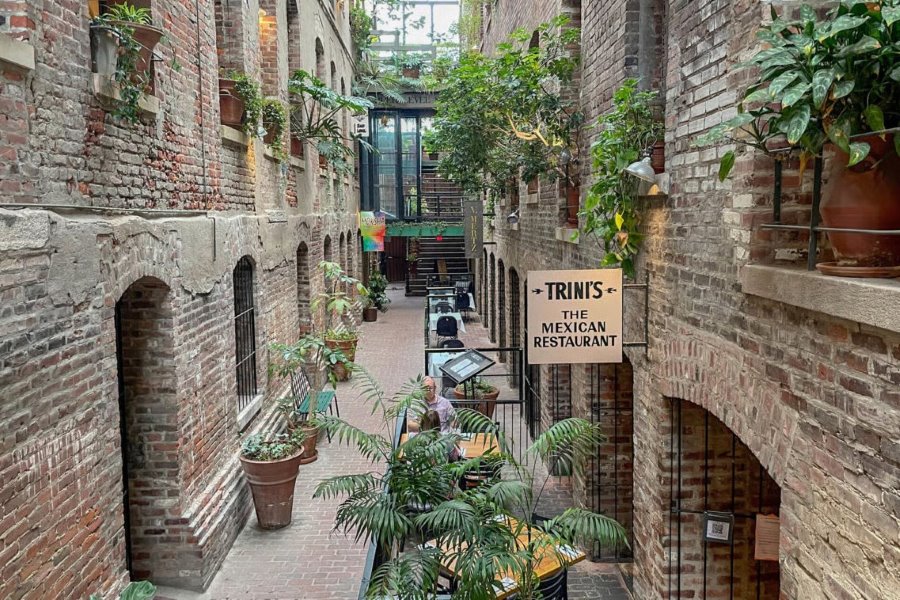
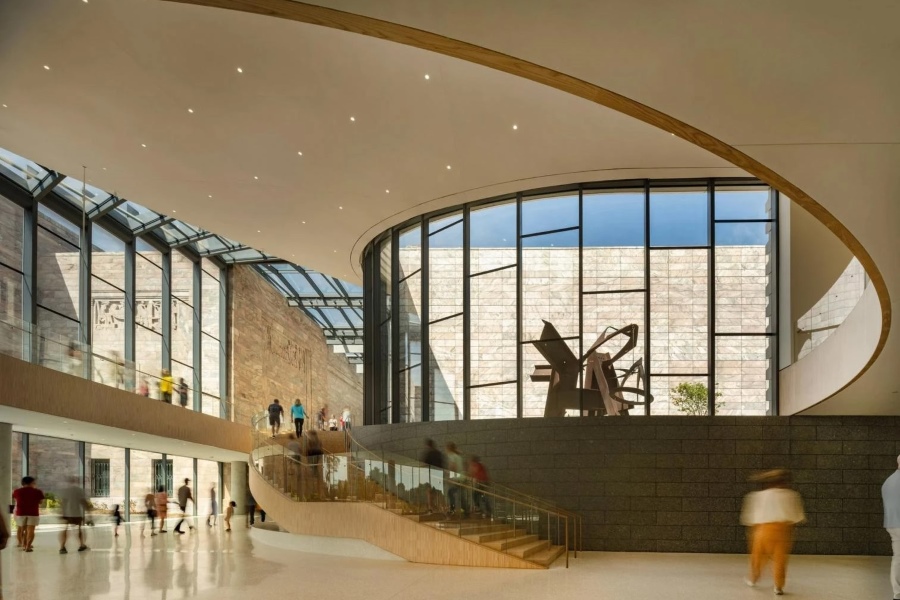
The hotel is near a myriad of dining, shopping, and entertainment options in the historic Old Market district and around downtown. Several local attractions are within walking distance or a short drive, including the Holland Performing Arts Center, Joslyn Art Museum, the Durham Museum, Charles Schwab Field, the world-renowned Henry Doorly Zoo, and the Bob Kerrey Pedestrian Bridge.